

Where Is Commercial Real Estate Demand Headed? Introducing NAR’s Commercial Real Estate Demand Index
The NAR Commercial Real Estate Demand Index provides real estate investors, developers, and business owners with an essential tool for evaluating property market shifts before lease contracts are signed. Navigating commercial property investment requires more than looking in the rearview mirror. Traditional metrics like past vacancy rates and historical leasing velocity tell you where a market has been, but forward-looking investors need to understand where momentum is building before it reflects in lease signatures.
By tracking fundamental economic indicators, the NAR Commercial Real Estate Demand Index reveals underlying demand across office, industrial, retail, and multifamily sectors. Developed by the National Association of REALTORS® (NAR), this index tracks quarterly local economic drivers across more than 300 metropolitan markets.
Whether you are evaluating commercial spaces in mature international hubs or exploring emerging coastal retail hubs in locations like Hurghada and the Red Sea Riviera, understanding the insights from the NAR Commercial Real Estate Demand Index is crucial for maximizing long-term real estate ROI.
How Does the NAR Commercial Real Estate Demand Index Work?
Rather than focusing solely on completed transaction data, the NAR Commercial Real Estate Demand Index measures the real-world economic conditions that fuel space requirements. By utilizing public data from the Bureau of Labor Statistics and the U.S. Census Bureau, the index measures employment growth and demographic shifts relative to a baseline score of 100.
The 4 Key Sector Drivers Behind the Index
-
Office Sector (22% Weight): Measures growth in professional and business service jobs.
-
Industrial Sector (28% Weight): Evaluates manufacturing, transportation, and warehousing job expansion.
-
Retail Sector (22% Weight): Tracks leisure, hospitality, and retail trade employment shifts.
-
Multifamily Sector (28% Weight): Measures population growth as well as domestic and international net migration.
Comparing Property Types in the Commercial Demand Framework
To see how these underlying factors influence real estate decisions, consider how each property category responds to economic shifts:
| Commercial Sector | Primary Demand Metric | Key Growth Drivers | Investor Strategy |
| Office | Business Services Employment | Corporate expansion, tech hiring, co-working demand | Target prime, amenity-rich central locations |
| Industrial | Logistics & Manufacturing Jobs | E-commerce growth, supply chain infrastructure | Focus on transport nodes & storage hubs |
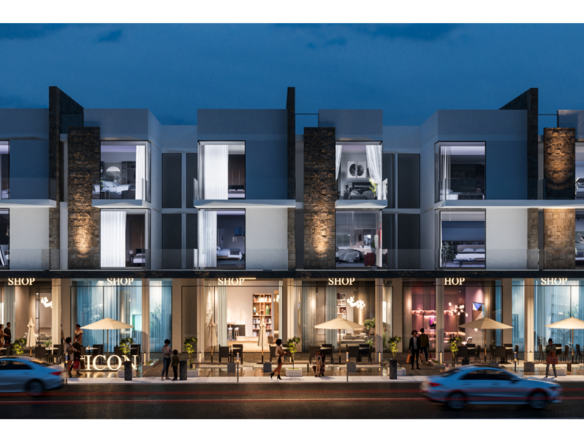
| Retail | Hospitality & Local Trade Jobs | Tourism footfall, consumer spending, lifestyle amenities | Invest in high-traffic resort & commercial strips |
| Multifamily | Net Migration & Population Growth | In-bound relocation, digital nomad housing | Position near coastal lifestyle hubs & urban centers |
What This Means for International Property Investors
For international property investors—whether analyzing global trends via the NAR Commercial Real Estate Demand Index or building a portfolio in tax-friendly, high-yield markets like Egypt—the lesson remains identical: follow job creation, migration, and tourism infrastructure.
In fast-growing Red Sea destinations like Hurghada, Sahl Hasheesh, El Gouna, and Makadi Bay, commercial real estate demand is heavily driven by expanding retail strips, boutique office suites, mixed-use resort developments, and short-term hospitality rentals. By monitoring key employment and demographic trends highlighted in the NAR Commercial Real Estate Demand Index, savvy investors can pinpoint high-performing off-plan projects and commercial assets before market prices peak.
Frequently Asked Questions About Commercial Real Estate Demand
Is it safe to invest in commercial property in growing coastal markets like Hurghada?
Yes. Selecting prime commercial spaces in high-demand zones with strong tourism, ongoing infrastructure backing, and transparent legal property rights offers reliable rental yields and capital appreciation.
How does commercial ROI compare between retail and office spaces?
Retail and hospitality assets in tourist destinations frequently generate high seasonal rental yields, whereas well-placed office and mixed-use spaces deliver consistent, long-term lease stability.
How can the NAR Commercial Real Estate Demand Index help foreign investors?
The NAR Commercial Real Estate Demand Index provides a reliable framework for understanding how macroeconomic factors—such as job creation, net migration, and consumer spending—directly convert into physical real estate demand across different asset classes.
Take Advantage of Commercial Real Estate Opportunities
Looking to capitalize on high-growth commercial real estate, retail units, or luxury rental properties along Egypt’s Red Sea coastline?
Our team at Knight Properties brings deep local expertise, legal clarity, and market insight to help you secure high-yielding investments across Hurghada, El Gouna, Magawish, and Sahl Hasheesh.
Contact Knight Properties Today to discuss your investment goals with our commercial real estate specialists!





Join The Discussion