
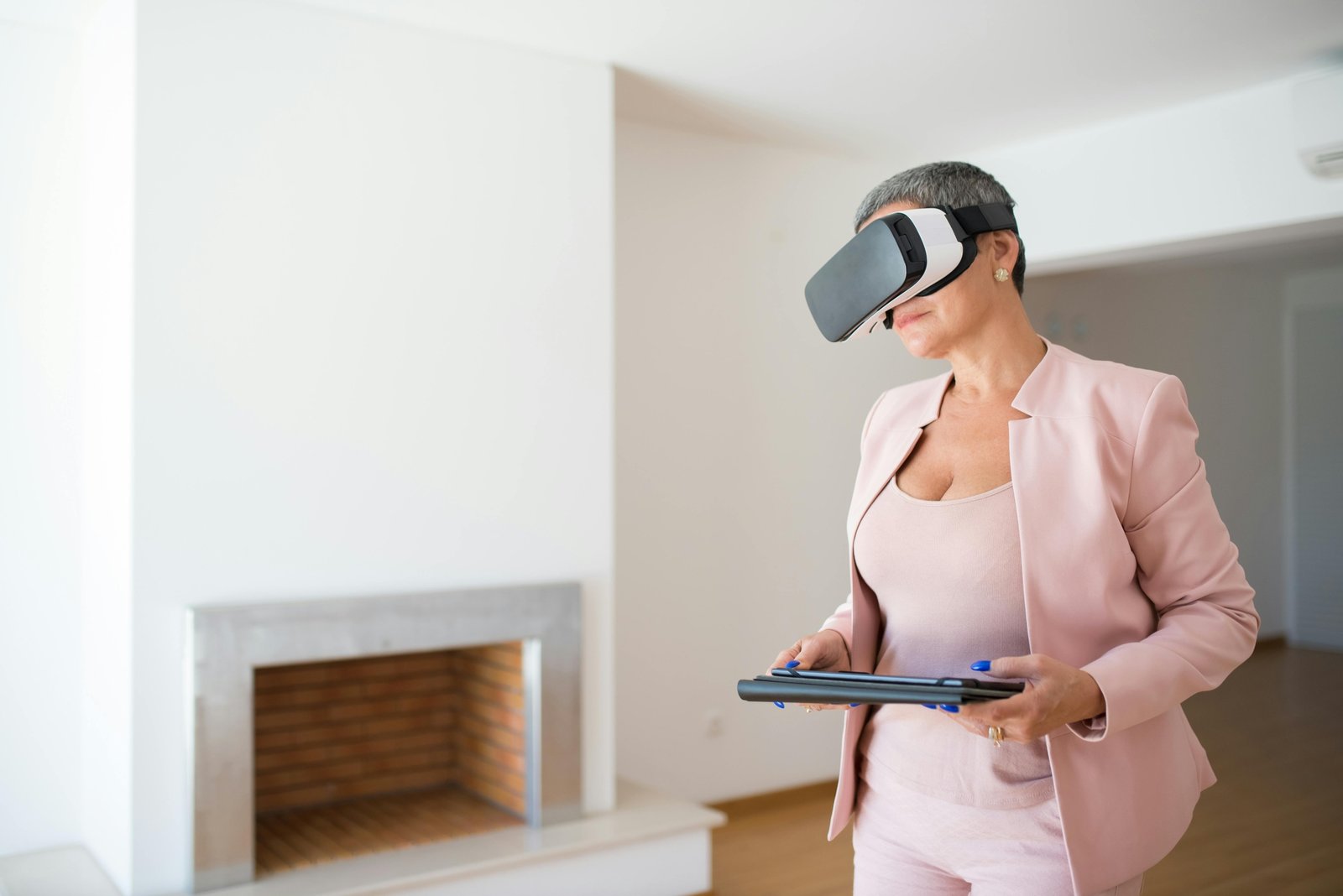
The Future is Here: How Real Estate and Metaverse 2026 Meet
The boundaries between the physical and digital worlds have officially dissolved. In Real Estate and Metaverse 2026, we are no longer just looking at 2D photos or flat floor plans. We are entering an era of “Spatial Real Estate,” where a property in Hurghada can be walked through, customized, and even “lived in” digitally before a single brick is laid.
But how exactly do these two worlds meet in today’s market? Let’s explore the four pillars of this digital revolution.
1. Digital Twins: The Operating System of Modern Buildings
The most significant meeting point is the Digital Twin. In 2026, every premium development at Knight Properties has a digital replica.
Beyond 3D Models: A digital twin is a live, data-driven model connected to IoT sensors. It allows owners to monitor energy consumption, structural health, and maintenance needs in real-time within a metaverse interface.
The Value: For the investor, this means total transparency and lower operational costs. You don’t just buy a villa; you buy a high-tech asset you can manage from anywhere in the world.
2. Virtual Sales Hubs: Closing Deals Without Borders
In Real Estate and Metaverse 2026, the “Sales Center” is no longer a physical office—it’s a persistent 3D environment.
-
Global Access: A buyer in London can meet an agent in Hurghada inside a virtual showroom. Together, they can fly over the resort, change the interior finishes of a kitchen in real-time, and view the exact sunrise from the balcony.
-
Decision Speed: This immersive experience reduces the “uncertainty gap,” allowing international investors to commit to high-value units with the same confidence as if they were standing on-site.
3. Tokenized Ownership and “Meta-Mortgages”
The meeting of real estate and blockchain within the metaverse has revolutionized how we fund properties.
-
Fractional Investment: Through tokenization, investors can buy “shares” of a luxury resort in the Red Sea. These digital shares are often represented as NFTs within the metaverse, granting the owner access to exclusive virtual clubs or physical rental yields.
-
Instant Liquidity: In 2026, selling your “share” of a property is as fast as a digital transaction, removing the months of paperwork traditionally associated with real estate.
4. Augmented Reality (AR) on the Streets
The metaverse isn’t just “inside” your computer. Through AR glasses or smartphones, the metaverse overlays onto the physical world.
-
The Smart Walk: Imagine walking through a construction site in Sahl Hasheesh and seeing the completed building superimposed over the foundations. You can see which units are sold, which are available, and the price—all in your field of vision.
The Comparison: Traditional vs. Metaverse Real Estate
| Feature | Traditional (Pre-2024) | Metaverse Integrated (2026) |
| Property Viewing | Physical travel or 2D photos | Immersive 360° Spatial Tours |
| Management | Manual inspections | Live Digital Twin Monitoring |
| Sales Cycle | 3-6 Months | 1-2 Weeks (via Tokenization) |
| Marketing | Social Media Ads | Persistent 3D Showrooms |
5. Security and Transparency: The Blockchain Guard
The integration of Real estate and Metaverse 2026 is built on the bedrock of security. In the past, property fraud and paperwork errors were significant risks. Today, the metaverse meeting point uses decentralized ledgers (Blockchain) to ensure:
-
Immutable Records: Once a property “Digital Twin” is registered or a virtual tour leads to a sale, the transaction is etched into a ledger that cannot be altered or deleted.
-
Smart Contracts: These self-executing contracts automatically release funds only when certain conditions (like a successful structural inspection) are met. This protects the investor’s capital and ensures that Real estate and Metaverse 2026 is not just about cool visuals, but about ironclad legal safety.
Conclusion: The New Reality for Investors
The integration of Real Estate and Metaverse 2026 is not a gimmick; it’s a mechanical necessity for a globalized market. It offers transparency, speed, and a level of engagement that was previously impossible. At Knight Properties, we are bridging this gap, ensuring that our clients are the first to inhabit the future of the Red Sea.



Join The Discussion